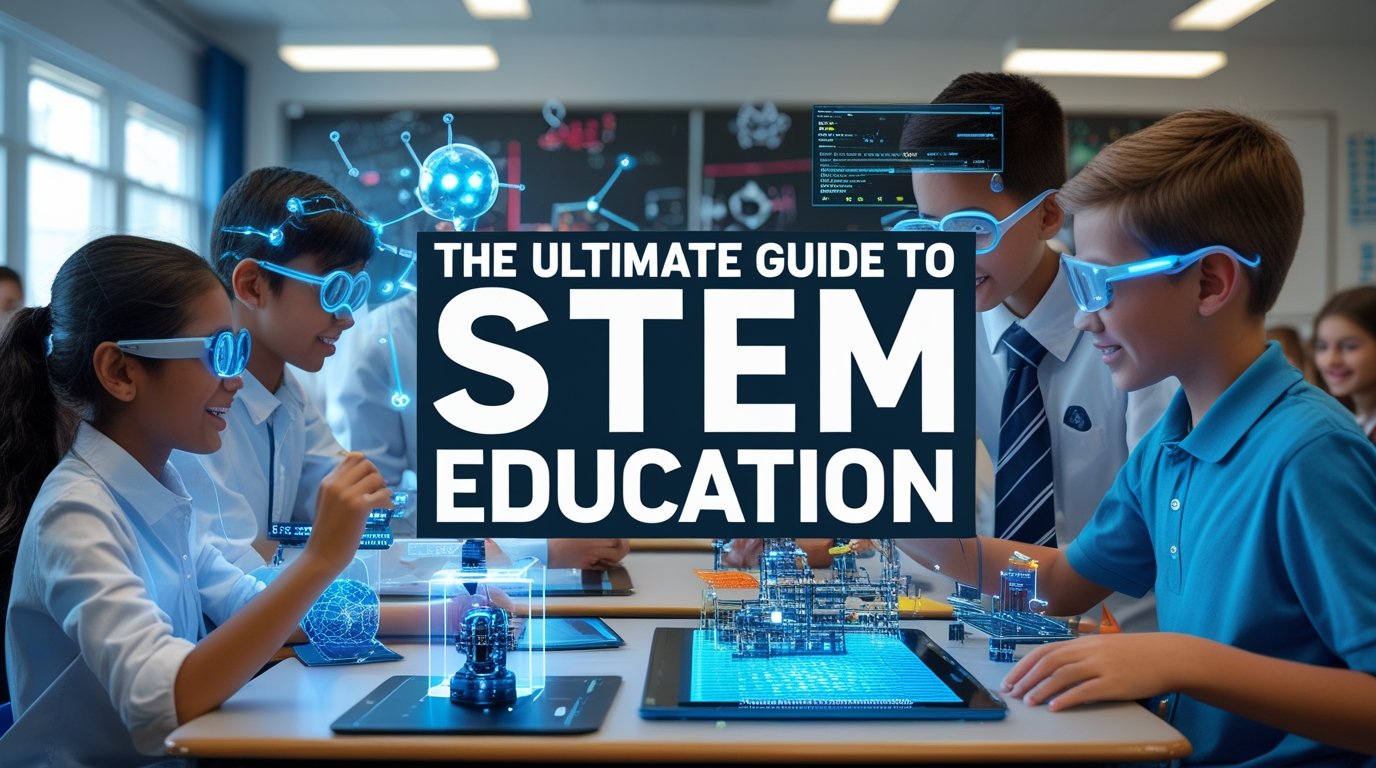
STEM education means a system of combined learning on Science, Technology, Engineering, and Mathematics, which teaches students not only theories but also their practical use. In today’s modern era, where technology is progressing in new ways every day, the importance of STEM education is increasing day by day. This learning helps students to learn critical thinking, problem solving, and analytical skills, which make them better not only in academics but also in real-life situations. STEM is not just a subject but a mindset that gives students the passion to think of new solutions and work on new ideas.
Often, people think that STEM is only for those who are good at science or maths, but in reality, this medium allows every student to explore how they can contribute to the world. Its benefit is not just limited to students, but the whole society benefits from it because STEM graduates bring new inventions, medical solutions, and environmental technologies that make life better. In today’s era, STEM education is not just an option but has become a necessity if we want our new generations to move ahead and find solutions to the problems of the world. In this blog, we will explore in detail the benefits of STEM education, careers, and its impact on society.
Key Benefits of STEM Learning:
STEM education does not limit students to bookish knowledge but helps them find solutions to real-life problems. This type of education promotes critical thinking, where students look at a problem from multiple angles and find the best solution. In addition, STEM subjects also promote creativity, especially when students create new things in engineering projects or coding tasks. These lessons also teach the importance of teamwork and collaboration, as STEM tasks are often done in groups where every student has a role to play. The biggest benefit of STEM is that it teaches students 21st-century skills such as digital literacy, research methods, and scientific inquiry. When children are exposed to STEM from a young age, their confidence increases, and they are not intimidated by new challenges. This STEM also prepares students for future jobs where demand for technical skills is increasing.
Today, industries are moving towards automation and artificial intelligence, and STEM graduates get training to work in such places. STEM education creates a passion for lifelong learning in students, where they are not just focused on one field but are always ready to learn new skills. Due to all these benefits, it is important to make STEM education an essential part of every school and college.
Popular Careers in STEM Fields:
The most exciting aspect of STEM education is that it opens up a wide range of career options for students. In the field of Science, people play their part in the health and sustainability of society by becoming doctors, lab technicians, biotechnologists, or environmental scientists. In the domain of Technology, roles such as software developers, data analysts, cybersecurity experts, and AI specialists are in great demand. Today’s digital era cannot be complete without these fields. Engineering is also a major field that includes civil, mechanical, electrical, and aerospace engineering, where professionals create new infrastructure, machines, and systems. There are many careers in the field of mathematics, too, which include actuaries, statisticians, financial analysts, and educators who help in making important decisions by analyzing data. The special thing about STEM careers is that these people not only earn a good salary but also provide solutions to important problems of society.
There is a lot of scope for innovation in these careers, where every day there are new challenges and opportunities. STEM careers are stable and their demand is going to increase in the future, therefore, students should develop their skills from the early stage itself. Both the government and private sectors are in search of STEM professionals. If a student is interested in logical thinking, creativity, and analysis, then STEM careers can be an ideal path for him/her.
How STEM Education Shapes the Future:
STEM education is not just limited to individual development, but it shapes the future of the whole world. When students learn STEM skills, they become capable of making innovations and discoveries that are essential for the progress of society. All the great scientific and technological advancements in the world today are a result of STEM knowledge. Whether it is a solution to climate change or space exploration, a healthcare revolution, or the basic idea of smart cities, it is all related to STEM education. When the new generation is taught STEM tools and concepts from an early age, they become capable of finding creative solutions to the world’s complex problems. STEM education trains the future workforce in such a way that they can easily adjust to new economic sectors such as renewable energy, biotech, robotics, and digital finance.
STEM makes the world more connected, automated, and efficient. The impact of every new invention is not just limited to technology but also reaches culture, economy, and politics. The impact of STEM is long-term and lasts for generations. If today’s students get a strong STEM base, tomorrow’s future can be more secure, stable, and sustainable. STEM education is an investment that shows both individuals and nations the way forward.
Making STEM Accessible to All Students:
If we want STEM education to be truly universal, we must make it accessible to every student, regardless of their gender, background, or ability. STEM programs are often difficult or limited in rural areas, low-income families, and for girls. This inequality can restrict the future of STEM. The solution to this problem lies in inclusive policies and equitable resources where every student is given equal opportunity to explore STEM. Schools must create learning environments that encourage curiosity and collaboration. Teachers must also receive appropriate training and resources to motivate all students. Digital tools like online labs, simulations, and coding platforms can make STEM more accessible, especially in areas that do not have physical resources. It is also important to create special programs and mentorship opportunities for girls and minorities so that they too, can confidently choose STEM careers.
When students see people like them working in STEM fields, their trust and interest will increase. Government and private organizations should come together to start scholarships, workshops, and awareness campaigns for STEM access. When every student has equal access, the real potential of STEM education will be realized, and we will be able to build a more balanced and empowered society.
Conclusion:
STEM education is such a force that not only changes the life of a student but also shows new paths to the whole society. The combination of Science, Technology, Engineering, and Mathematics provides such tools and skills that are necessary to survive in today’s fast-changing world. When students take STEM courses, they not only pass the exams but also become capable of finding new solutions, creating new ideas, and designing new systems. STEM education gives them a new way of thinking and understanding, which prepares them for the future. The impact of this kind of thinking is long-term, where a young child who learns coding can become a software engineer of tomorrow and change the software systems of the world. There are a lot of career options in STEM fields, and the income potential is also strong.
The most important thing is that STEM education helps find solutions to world problems like climate change, diseases, and digital challenges. If every student gets an opportunity in STEM, we can build a society that is a perfect mix of innovation, inclusivity, and development. STEM education is not just a subject but a promise of a future that has the potential to make every generation empowered and successful.
FAQs:
1. What is STEM education, and why is it important?
STEM stands for Science, Technology, Engineering, and Mathematics. It’s an educational approach that combines these subjects to develop practical skills like problem-solving, critical thinking, and creativity. In today’s technology-driven world, STEM education prepares students for real-life challenges and future careers, making it an essential part of modern learning.
2. How does STEM education benefit students beyond academics?
STEM education builds 21st-century skills such as teamwork, digital literacy, and analytical thinking. It also boosts confidence, creativity, and adaptability, helping students succeed not only in exams but in real-world situations. It instills a mindset of innovation and continuous learning from an early age.
3. What career opportunities are available in STEM fields?
STEM offers a wide range of careers such as doctors, software developers, engineers, data analysts, and financial experts. These jobs are in high demand, offer good salaries, and involve solving real-world problems in areas like healthcare, technology, the environment, and infrastructure.
4. How does STEM education shape the future of society?
STEM education drives global progress by training future innovators who work on climate change, healthcare, space exploration, and smart technologies. It enables students to adapt to new industries like robotics and renewable energy, making societies more efficient, sustainable, and resilient.
5. How can we make STEM education more accessible to all students?
To ensure equal access, schools and governments must provide resources, training, and inclusive programs for students from all backgrounds, especially girls and underrepresented communities. Using digital tools, offering mentorships, and creating scholarships can help bridge the gap and empower every student to pursue STEM.